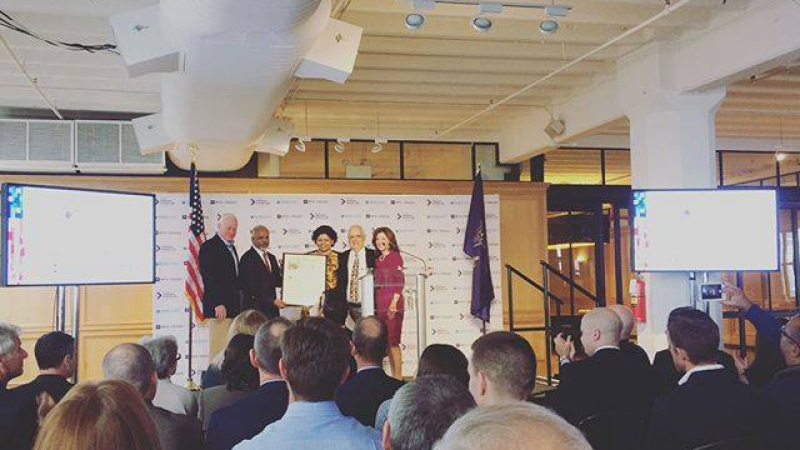
WeWork Creator Awards – Hollywood Reporter Article

We’re now inside the one week countdown to WeWork Creator Awards Global Finals and we still feel like we’re dreaming!

We are beyond honored and excited to be one of eight finalists from around the globe competing at Madison Square Garden for a shot at a million dollars. We’re in the company of organizations doing absolutely amazing things, and we couldn’t be more grateful for that.

If you will happen to be in the NYC area next Wednesday you can come join the excitement! It not only includes pitches by eight inspiring companies, but also a performance by Macklemore (and free food and drinks and all that good stuff).

We’re as busy as ever getting ready, but in the meantime here’s some more news about the night that just came out – it’s going to be even more star-studded than we realized!

The following is a repost of an article from the Hollywood Report. Original article can be seen here.

The event in which eight entrepreneurs from around the world will be competing for a $1 million grand prize, will also feature performances from Macklemore and Soren Bryce.

Jane the Virgin actor Justin Baldoni is set to co-host the inaugural WeWork Creator Awards Global Finals, The Hollywood Reporter can reveal exclusively.

At the event, set for Wednesday Jan. 17 at the Theater at Madison Square Garden in New York, eight entrepreneurs from around the world will be competing for a $1 million grand prize.

Baldoni will be co-hosting alongside former supermodel Adi Neumann, with Macklemore and Soren Bryce set to perform.

In addition to his role on Jane the Virgin, Baldoni is the co-founder of Wayfarer Entertainment and creator and executive producer of the talk show Man Enough.

“I’m so excited to be co-hosting the first WeWork Creator Awards Global Finals. At Wayfarer Entertainment, we are focused on disruptive inspiration, so I’m especially honored to support other entrepreneurs who are sparking change and trying to make a difference in the world,” Baldoni said. “I know firsthand that when you’re starting something from scratch, it can be really lonely, and the environment that WeWork fosters breeds creativity and community, which are two essential pieces to make this world a better place.”

The Creator Awards Global Finals will be judged by WeWork co-founder Adam Neumann, entrepreneur Tim Ferriss, Miracle Mop inventor Joy Mangano, Microsoft GM of business development Tamara Steffens and Carol’s Daughter president and founder Lisa Price.

The global finalists competing are the following seven entrepreneurs: Naveed R. Parvez (Andiamo), Becca Keaty (Bunker Labs), Elizabeth Lindsey (Byte Back), Sebastian Junemann (Cadus), Manal Kahi (Eat Offbeat), Or Retzkin (EyeControl) and Samantha Snabes (re:3D). Six semi-finalists will compete for the “audience save” final spot on stage: Robert Logue (Quaker City Coffee), Grace Hsia (Warmilu), J. Kevin White (Global Vision 20/20), Sam Teicher (Coral Vita), Mursal Hedayat (Chatterbox) and Sangita Patel and LeVar Burton (LeVar Burton Kids).

The Creator Awards Global Finals is the latest step in WeWork’s initiative to commit funding and brand visibility to entrepreneurs and innovators across all industries and stages of growth. WeWork has hosted seven regional Creator Awards in D.C., Detroit, Austin, London, Berlin, Tel Aviv and New York.

Morgan Hamel

Blog Post Author

A Huge New Office for Huge 3D Printers

As you may be aware of by now, the re:3D Houston HQ moved last year, upgrading from a humble 2,700 square feet to a much-needed 7,000. We did a post on the new space’s specs when we were first moving in, but we thought you would appreciate a check-in now that we’re about half a year in to our new home.

If you haven’t already seen it, we did a short video on the new office and what it means to our team. Give it a watch for a visual tour of the space and some of our Houston team sharing their excitement about the newfound elbow room.

The extra 4,000+ square feet are an absolute joy to our Houston team. With the extra space has come new machinery (namely the beastly Hurco CNC seen over Steve’s shoulder in the machining room), large expanses of shelving perfect for storing more Gigabot prebuilds, and dedicated space for different departments so everyone has room to spread out.

But as much as our team can’t believe how we made it work for so long in our previous, sometimes-too-cozy office, we’re grateful for that space and the lessons it taught us.

As Matthew explained, a small space can do wonders for instilling efficiency in an organization. We became a well-oiled machine and a stronger team thanks to our time there, and those lessons will follow us to any future space we find ourselves in. Not to mention we are so appreciative of everything the new space affords us.

The extra shelving allows us get more prebuilds made and ready to go, which, Tammie explains, allows us to get Gigabots out the door faster. She reckons everything’s going out smoother because of that.

Our dedicated R&D space means engineering projects move quicker and new products can hit our store faster. (A couple exciting ones are just on the horizon – stay tuned.) The on-site machining room (and huge new CNC mill) factors into this as well. R&D projects can move forward faster when the necessary parts are milled in the room just next door, and turnaround time on new iterations can be measured in minutes instead of days or weeks.

And at the front of it all, a space to showcase what’s most important to us: the different ways in which others are using Gigabot.

The showroom, as we’re calling it, will be the home to a variety of projects enabled by Gigabot, generously provided to us by Gigabot owners from around the world. Our intent is to open the space to the public so people can see what large scale 3D printing allows different organizations to do, and also to educate. We are working on building a dedicated teaching & training space into one section of the showroom, specifically for the public and for customers.

We’re incredibly thankful to be where we are today, and we will always remember where we came from and will be forever grateful for the lessons we learned there. We hope to see some of you at the new space!

Morgan Hamel

Blog Post Author

Gigaprize 2017

The 2017 Gigaprize is open!

Read on to learn what the competition is all about and how you enter.

Our favorite part about the work we do at re:3D is the doors it opens for others. A 3D printer can help organizations design better products, cut costs, allowthem to manufacture their goods more efficiently, reduce their time to market. It can spell the difference, as a business, between being able to make a product and not.

As a 3D printer manufacturer, our goal is to make this technology available to as many people as possible so that its enabling potential can be used for good around the globe.

Part of the way we do this is by dedicating ourselves to our mission of creating large-scale 3D printers at an affordable price – we’re always looking for ways to up our quality while keeping costs low for our customers. The other way we do this is through the Gigaprize.

The Gigaprize is a giveaway competition we run: for every 100 Gigabots we sell, we give one away to an organization that will be using it for good.

This is our way of supporting others with social good missions who may not otherwise have the means to do what Gigabot will enable.

The competition is simple: make a video explaining how you or your organization would use Gigabot. What would the technology enable you to do? What would it mean for your company and its mission? What impact would it have on your community? Don’t worry about production quality – you can shoot the video on a cell phone – we’re interested in what you’re saying, not how you look while you’re doing it.

Submit the video through the Facebook contest submission page by December 25th and stay tuned for when we announce the winner, as chosen by a panel of judges, on New Year’s Eve.

Past winners of the Gigaprize include the Tunapanda Institute in Nairobi, Kenya and Good Works Studio in Houston, Texas. Tunapanda is a non-profit that runs a Nairobi-based school training young people in technology, design, and business skills, with a focus on applying disruptive technologies like 3D printing and wireless networking to solving local problems. Good Works Studio is a two-man design firm creating products to better the lives of families living in refugee camps.

Morgan Hamel

Blog Post Author
When 3D Printing and Nature Collide

The often strained relationship between humans and nature is no more evident anywhere else than in large cities. Trees and fields have been replaced with skyscrapers and roads, and often the little greenery that does exist is confined to highway medians or parks flanked by concrete jungles.

As the world population climbs steadily towards eight billion, our partnership with nature will become increasingly more strained – and more important. Strides have been made in recent years to better incorporate nature into urban life – the New York City High Line or vertical forest skyscrapers, for example.

This intermeshing of nature and technology/design is what excites Yarden Mor and inspired Symbio.

A graduate of a special joint program of computer science at the Hebrew University and industrial design at the Bezalel Academy in Jerusalem, Symbio is her graduation project.

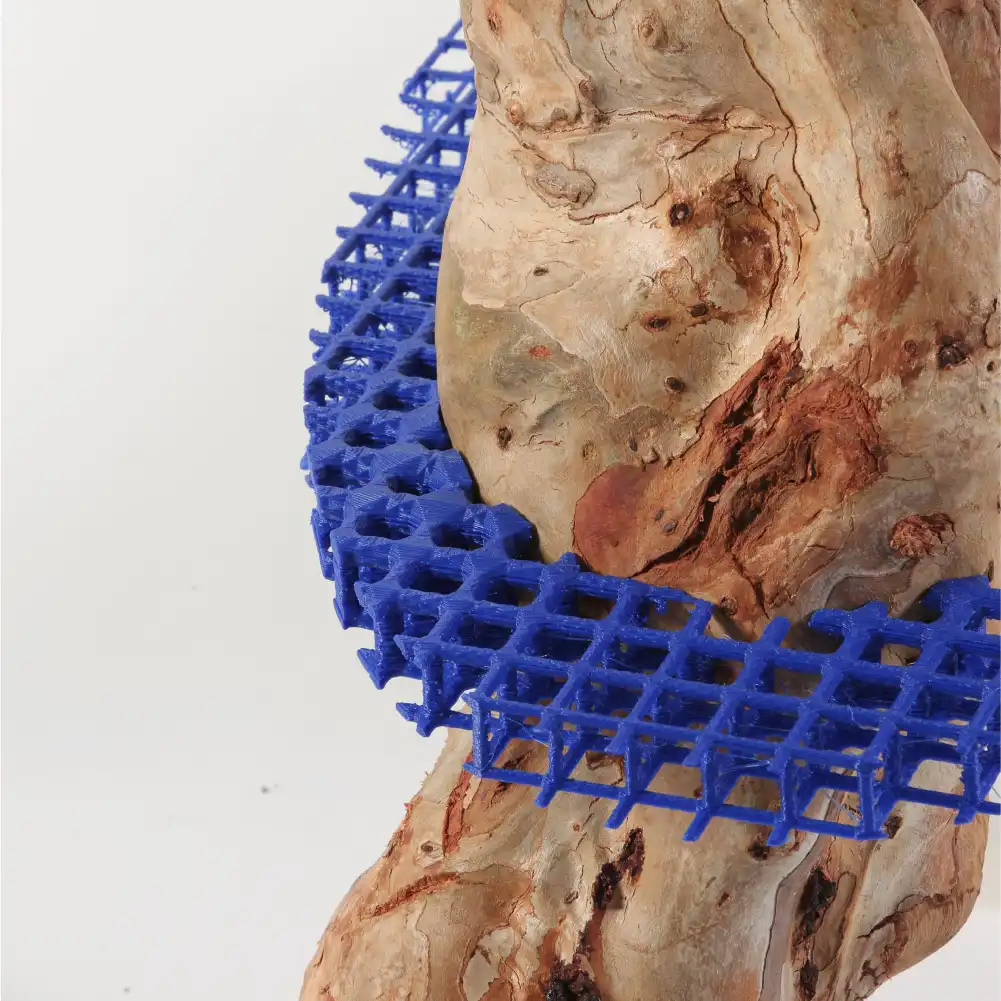
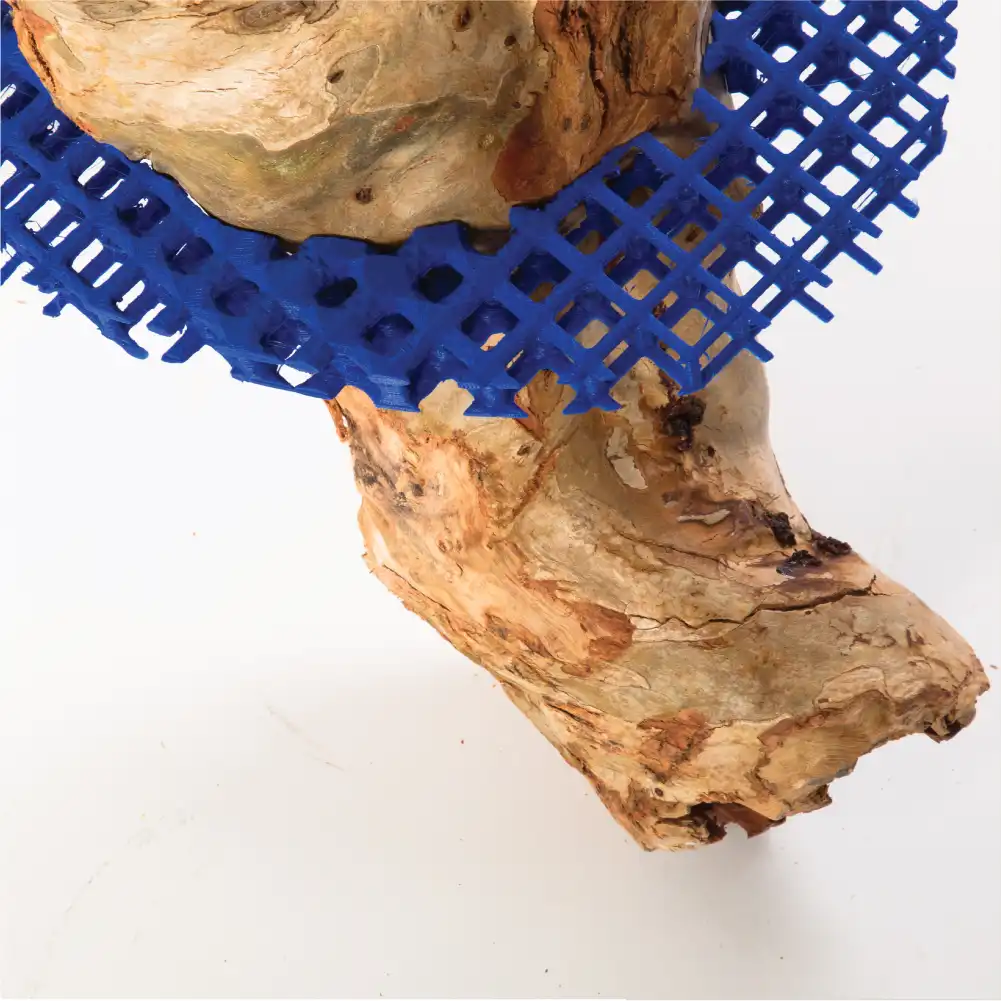
Her goal is to encourage symbiosis between humans and nature through technology. Symbio is a method to connect to existing natural foundations – like trees and rocks – and enable sustainable living preservation while maintaining the comfort we are accustomed to in modern life.

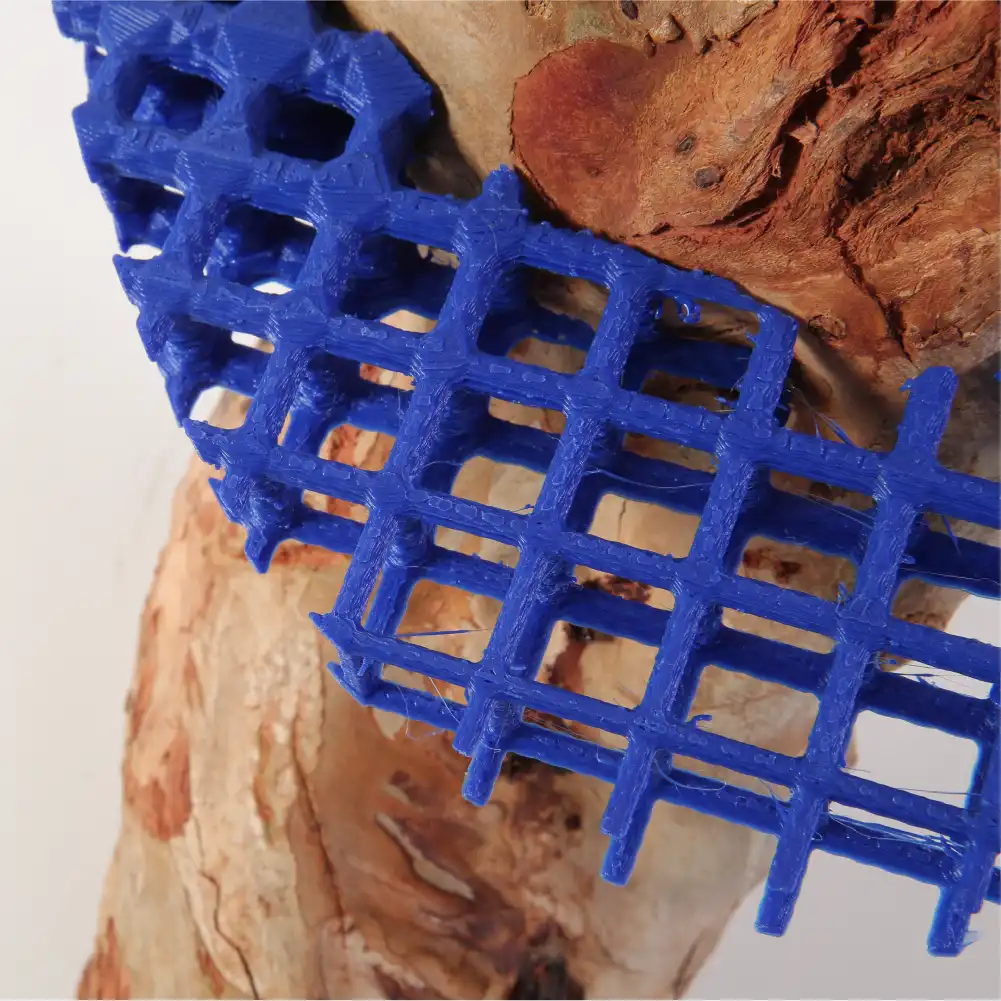
Yarden demonstrated the idea using a fallen portion of tree. Using 3D scanning to create a CAD model of the branch, she can create a design that fits perfectly to its shape. Parametric design simulates forces and optimizes the model’s weight and strength, and the complex digital outcome is birthed into the physical world thanks to 3D printing. Autodesk Tel-Aviv helped Yarden print her prototype on their Gigabot.

In the process of creating her prototype, Yarden researched technologies & materials, development of a system, and created prototypes of applications in urban design. This project is a proof of concept for larger-scale designs involving the same technology.

See more of Yarden’s work on her Instagram @yarden.mor.

Morgan Hamel

Blog Post Author
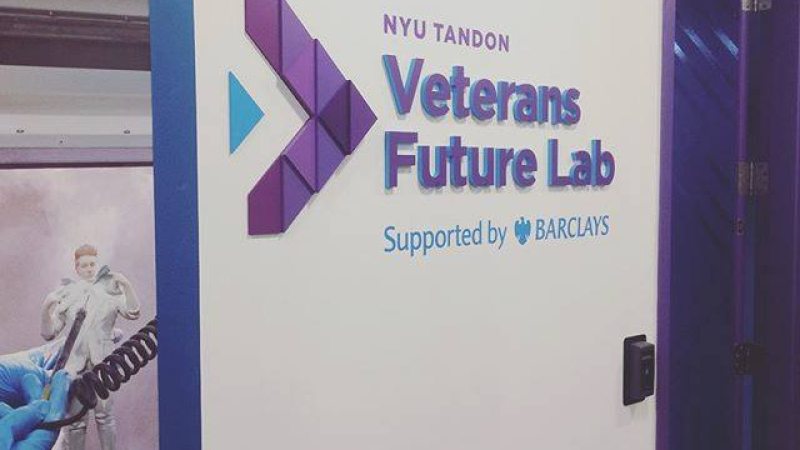
Grand Opening of the NYU Tandon School of Engineering Veterans Future Lab

On Monday of this week I had the privilege of attending the Grand Opening of the NYU Tandon School of Engineering Veterans Future Lab in Brooklyn, New York.

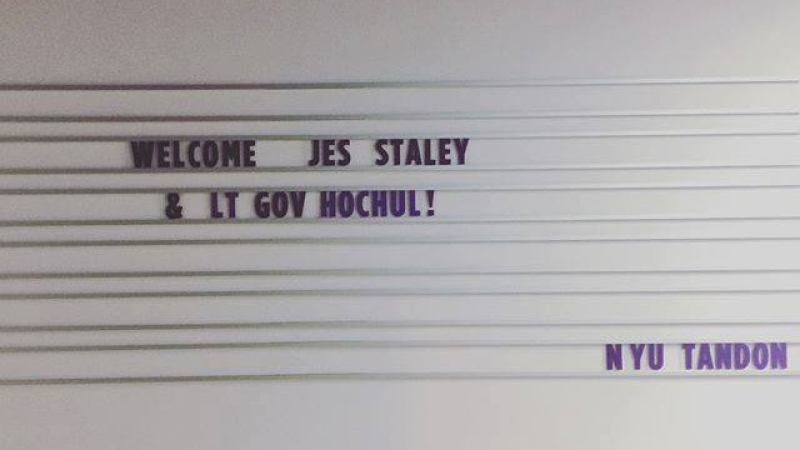
A very special lineup of speakers graced the event, including New York State Lieutenant Governor Kathy Hochul, Dean of Engineering at NYU Katepalli Sreenivasan, New York State Assemblyman Joseph Lentol, Barclays Group Chief Executive Officer Jes Staley, and one of the the engineering school’s namesakes, business-leader and humanitarian Chandrika Tandon.

23472866_1149832045151934_7769888938055487519_n

Housed in Industry City on Brooklyn’s “Innovation Coastline,” the lab will be an early-stage startup incubator for United States military veterans.

More than a third of all returning military veterans have entrepreneurial ambitions, speakers at the event remarked, but just under 5% launch their own businesses, according to the Bureau of Labor Statistics. With some 18 million veterans in the country, that’s a lot of unrealized business ideas.

Lieutenant Governor Kathy Hochul told a story about a moment that left a profound impression on her on a visit she made to an American military base in Afghanistan. Sitting around a table with a group of soldiers, she asked them about their greatest fears. And in that tent in the barren, almost lunarscape-esque terrain of Afghanistan, in the heart of Taliban territory, the soldiers’ response stunned her. They were worried about finding a job when they returned home.

The Veterans Future Lab addresses exactly this fear.

The goal of the program is to provide business support and mentorship to a group of people who have given so much to serve their country, to enable them to be successful in this next mission in their lives.

23561282_1149832018485270_8390396753698082240_n

With their first round of 15 companies starting in January, the program will offer participants 12 months of incubation, mentorship with New York City industry professionals and NYU faculty, and free legal services, among many more benefits.

One of the other perks of the program is the makerspace.

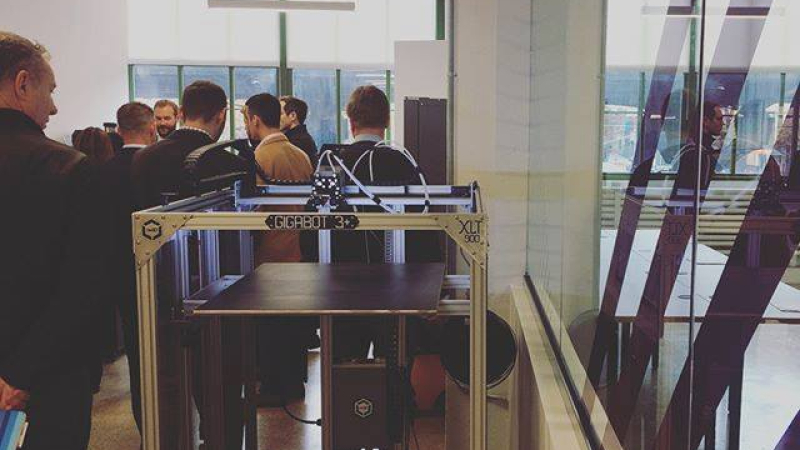
The businesses will have access to a bona fide buffet of prototyping equipment, from laser jets to water jets, injection machines to sewing machines, and – you guessed it – a Gigabot (among a list of other 3D printers).

As a veteran-owned company ourselves, we couldn’t be more excited to have a Gigabot available to the participants.

23472783_1149832011818604_590758024054638426_n

Split between the NYU Tandon School of Engineering Makerspace in Downtown Brooklyn and the Veterans Future Lab offices in Industry City, any physical design and prototyping needs the entrepreneurs may have are covered from all angles.

A big deal for not only veterans but also the city and state of New York as a whole, the lab was made possible with the support of Barclays and the Empire State Development Corporation.

As Lieutenant Governor Hochul put it, “This is a very good day in the state of New York.”

23561282_1149832015151937_2176488689371169523_n

Morgan Hamel

Blog Post Author
Q&A with CEO of Risu

First off, can you tell us about yourself and your company, Risu?

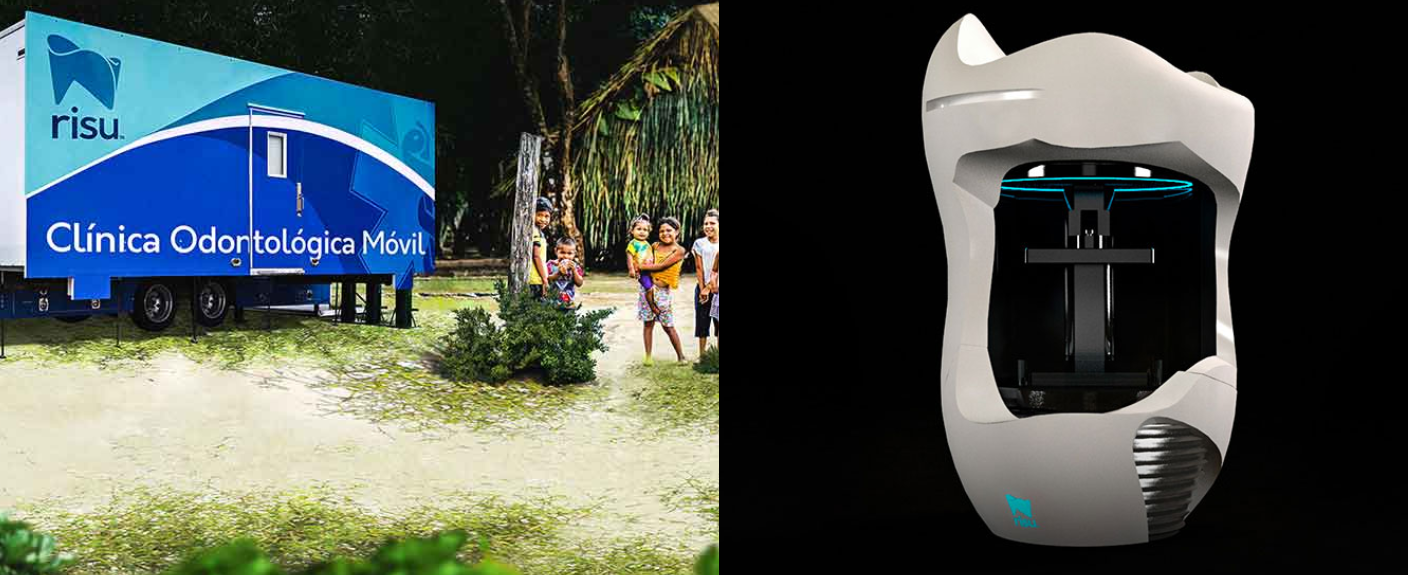
Hi! My name is Maria Clara Nascimento and I am the Co-Founder and CEO of Risu, a company developing technology that combines artificial intelligence, robotics, and 3D printing to revolutionize the dental restoration industry. Risu will be the first 3D printer that makes dental prosthesis with a realistic look and feel, as well as strength and durability. I have also co-founded a humanitarian NGO that provides dental services, food supplies, and free medical assistance to remote indigenous villages in Venezuela and the Amazon region. I define myself as an incurable fan of road trips in any language, and enjoy a 100% real smile, turbulence on planes, sleeping on chairs, and sitting at tables. I received my BA in Social Communications from the Universidad Arturo Michelena.

What program are you in that connected you to re:3D?

The Young Leaders of the Americas Initiative (YLAI) Professional Fellows Program is a U.S. Department of State initiative funded by the Bureau of Educational and Cultural Affairs, implemented by the Meridian International Center, and applied in Austin by the International Office of the University of Texas. I will be working together with re:3D to gain essential skills through mentorship in business, organization, and social entrepreneurship in a four-week fellowship. Upon completion of the program, I’ll return to Venezuela to apply these new skills towards creating a significant impact in my country.

Why were you matched with re:3D?

Like finches in the Galapagos, we all continue to evolve, and what better way to do that learning from the very best. re:3D has a very successful business which I will learn to build during my time spent with them, together with the leadership skills and scalability of the company. But most important, Risu was created to improve the quality of life of the indigenous people in the Amazon region, and re:3D is a business focused on creating a transformative change with the technology they have developed for those who need it the most. Other than the technological aspects of the Risu Smart 3D project and its connections to re:3D, we were matched due to the social impact we want to achieve through our work. I will absorb all the knowledge, energy, and passion that this amazing team has shown me so far, and channel it towards making a positive difference in the indigenous communities.

What will you be doing for re:3D and what do you hope to learn?

I will be working on selected projects together with re:3D, where I will use the experience I have and couple it with the new skills the team will be teaching me. I want to understand the deeper layers of what makes this team a successful one, how have they managed to rise above all the challenges that early startups face daily, and the skills required to be a leader. In the technological aspects of re:3D, I hope to learn about the thought process behind the building of Gigabot, how to scale the business accordingly with the growth of the company, and how to sell an idea to investors that may be interested in financing the project. I would also love to learn how to navigate through the difficulties of being a young entrepreneur and a woman in a world and country where a leader with those qualities is hardly accepted or recognized.

What is your favorite 3D printing project that you’ve done or seen done in the past?

I have so many! But the one I liked the most was a 3D-printed pizza, made by NASA for astronauts that will be sent to Mars. It’s still in development, but the results so far have been great (and hopefully delicious – I haven’t tasted it yet). The reason I like this project so much is that it goes on to show that 3D printing is the future of humanity, where everything we need will be manufactured in our own homes. Other projects that I have adored are the ones related to medicine and prosthesis.

HP is also developing a 3D-printing technology that will shape the future, the Jet Fusion 3D Printer. They claim it can create a multi-color product and change the material’s properties. It’s a very unique printer, although it is still in development, and I like the very challenging aspects of the project and how it can disrupt the entire 3D printing world.

What is your filament of choice?

The PEEK filament. It is biocompatible and has high-quality mechanical, physical, optical, and thermic properties. It is one of the top filaments with great tensile strength, and it’s currently used for cranioplasty implants, dental case models, and hip and leg prosthesis, among other uses. Thanks to this filament, the lives of thousands have changed for the better, improving their quality of life and enabling them to reinsert themselves into society.

What would you print with super large-format Gigabot+10,000? (10m cubed–it’s bigger than a football field)?

The question is “what wouldn’t I print.” If I had a large-format Gigabot like the one described, it would never catch a break. It would be printing stuff forever. The first order of business would be creating a spaceship. The second, a ginormous robot. The third, a lot of smaller 3D printers that will also be printing smaller objects at the same time the big Gigabot is printing large-scale things. The filament I would utilize for the spaceship is one that probably doesn’t exist yet, as it would have to withstand the heat of the Sun. The moon is so last century, the Sun is a real challenge. Forget about the moonshot, I’ll make a sunshot.

It’s the Great Big Gigabot Giveaway Time Machine Edition–if you could give the 1,000th Gigabot to anyone in any epoch, who would you give it to and why?

Leonardo da Vinci. He was a creative genius, a strategic visionary, and a person who would do anything it took to create the machines he had imagined. I am sure the world would never be the same if he had a Gigabot in his hands, and it definitely would be a world where I would like to live in. The possibilities are endless.

Morgan Hamel

Blog Post Author

The Fire Station Gigabot

Chuck Grant wasn’t with the Magnolia Fire Department in 2011 when the Riley Road Fire happened,  but the effects of the massive blaze on the department he now works for as Assistant Fire Chief and Chief of Technology are still visible.

The fire took 10 days to contain and burned nearly 19,000 acres in Magnolia, Texas, northeast of Houston.

“The fire was in such a size that it knocked out cell service in a lot of areas,” Chuck recalls. This meant that the department’s typical public alert methods using Facebook, Twitter, and other cellular-dependent mediums were off the table. They had no easy way to communicate with the community they were trying to help.

What the firefighters found is that when residents didn’t know where to go or what to do, they came directly to the fire station to try to get information. But in a large-scale disaster like this one, that was a problem. “There was no one in the fire stations because they were all dealing with the emergency,” Chuck explains. The fire exposed a serious communication problem they realized they needed to remedy.

When Chuck joined the team, he began working with the Fire Chief to devise a solution to this problem.

What they came up with was something akin to a tool that many businesses use for public messaging: LED signs. The signs would be out front of each of Magnolia’s nine fire stations to display updates and actions during large emergency events, with the ability to change the information quickly and from the field.

The next order of business was aesthetic – they wanted to add a symbol of the fire service to the signs to make them their own, something that would look good for the community.

When they settled on the idea of a large fire hydrant statue on either side of each station’s sign – two at each location meant 18 in total – the next challenge became how to get them made. They started investigating options like fiberglass and bronze casting, but quickly realized that everything was far out of their budget.

That’s when they found Gigabot.

The sign project in conjunction with other potential uses for 3D printing at the station made getting their own Gigabot and fabricating the decorative hydrants themselves the most cost-effective option. Chuck already had a background in 3D modeling, so designing the hydrants was no problem. “It was just a matter of scaling something up from, say, an inch tall to 99 inches,” he said. “And the Gigabot was able to do that for us.”

The build volume of Gigabot was the original draw for their sign project, but in order to make the purchase financially worthwhile to them, they wanted the bot to have a second, longer-term use. This is where the RFID tags enter the story.

Fire stations operate under a system of strict regulations: a truck must have a certain amount of equipment before it can respond to emergencies, and this equipment has a variety of imposed lifetimes that need to be tracked. Chuck explains, “When I started 35 years ago in the fire service, no ax had an expiration date on it – either it worked or it didn’t. And now that’s all kind of changed. So the need for technology has really, really ramped up.”

On top of this, equipment must cycle in and out of the repair room as it’s damaged. A tiny crack to a mask takes that mask out of service until it’s fixed. Keeping track of what equipment is damaged, what needs to be replaced on trucks, where damaged equipment is in the repair process – they’re all more processes that need to be tracked.

All of these components add up to quite the logistical headache for fire stations: monitor the ticking clocks on your equipment to make sure active tools are not outside their expiration dates and take things out of circulation when they are, keep track of damaged items in for repair, and ensure your trucks have all the equipment they need to be ready to respond to a call at a moment’s notice.

It’s quite the operational feat for organizations whose main function is to save lives and battle fires.

In the interest of allowing firefighters to do what they do best, stations are looking for ways to manage all their equipment tracking in the most efficient way possible. Magnolia Fire found a solution in RFID tags from Silent Partner Technologies. The small radio frequency identification devices have an adhesive on one side to affix them to objects and they can be scanned from a distance and tracked via software on a computer. Chuck explains, “It very quickly gives the firefighters the chance to scan the truck and know that the vehicle is ready for them to respond to a call the minute they come into work.”

The problem was, Magnolia quickly realized that the harsh firefighting environment in conjunction with the wide variety of materials they had to tag was proving to be too much for the adhesive tags. “Because the fire service is a tough place to be a little tag, the adhesive strips on the back don’t hold up as well as they would in another application,” he explained. Heat from fires, water from hoses, and the general physical battery that the firefighting tools endure took their toll, and the department found themselves returning from events sans many of their RFID tags.

A solution, they realized, lay in 3D printing.

Using Gigabot, Chuck has been printing small compartments for the RFID tags to fit into which they can then mechanically fasten to their tools. 3D printing the tag holders provides a uniform material to which the adhesive can adhere, while also tucking the tags away where they can’t get bumped off. And they can do this all without altering the form and function of their well-designed equipment.

“All of our items have been well-designed, they’re well-engineered, and so for us to just take something and stick it on the side of it isn’t really a great option,” Chuck explains. What they’re doing is replicating a certain component of an object and building a pocket into it where they can hide a tag. The clip of a flashlight, for example, is replaced with its 3D printed clone, plus one RFID tag that you wouldn’t know is there. This becomes infinitely important when when you’re in a smokey room with thick gloves on, where a foreign part on a familiar tool can lead to dangerous confusion.

If the sign project was what led Magnolia Fire Department to Gigabot in the first place, creating custom RFID tag holders for their equipment is what kept them coming back. It’s proven to be the long-term justification they wanted in order to get their own 3D printer on-site.

“We certainly had this sign project that’s important…it’s going to be the thing that people notice the most because it’s going to be out in front of the building,” Chuck says. “But long-term, to get the most out of our investment, we need that secondary…task for the Gigabot to do.” The ongoing RFID project checks that box.

Gigabot has also proven itself as a problem-solver for issues that weren’t necessarily originally on Magnolia’s 3D printing radar, as the department now has the ability to produce any sort of custom-made pieces they desire. “Instead of going into the marketplace and kind of having to mold to what is available, we can meet our own needs by drawing our own parts and printing them,” Chuck explains.

An example of one such piece is an ingenious yet simple part to hang the firefighters’ masks inside the trucks, keeping them off the seats and floor where they’re more likely to get damaged, and hanging them in a way that doesn’t put stress on the facepieces. The clever design fits into the masks where the firefighters’ air tanks connect; with one twist they lock onto the piece so they can’t fly off en route.

The station’s service room is lined with equipment in for repair, including a table full of dinged masks. Much of the damage was due to them being tossed around inside trucks or hung in a way that puts undue stress on the temples of the masks, causing them to crack over time. This new piece, they explain, solves these problems and was infinitely simple for them to manufacture.

Clessie Hazelwood, Battalion Chief at Magnolia Fire Department, originally saw the design 20 years ago at a different fire department. Chuck prodded him to talk about how much effort that department had to go through to produce one. Clessie sighed, “Oh…they had to do machining, set up dies and everything.” It was a long, costly process.

When Magnolia got their Gigabot, Clessie came to Chuck to see if the part was something he could print for them. Chuck chimed back in, “From the time you told me about it ’til the time you held it in your hand, how long did it take?” Clessie paused.

“Less than a week.”

Morgan Hamel

Blog Post Author
Q&A with Allied Mask and Tooling Inc.

Allied Mask and Tooling is a secondary manufacturing company in Toledo, Ohio using their Gigabot in the production of parts for the automotive and medical industries. We talked with Jared Murray, Design Engineer and Project Manager, to understand more about how Gigabot has fit into their workflow and cut their costs.

Q. Can you explain the industry you’re in, the work Allied Mask and Tooling does, and how Gigabot fits into your process?

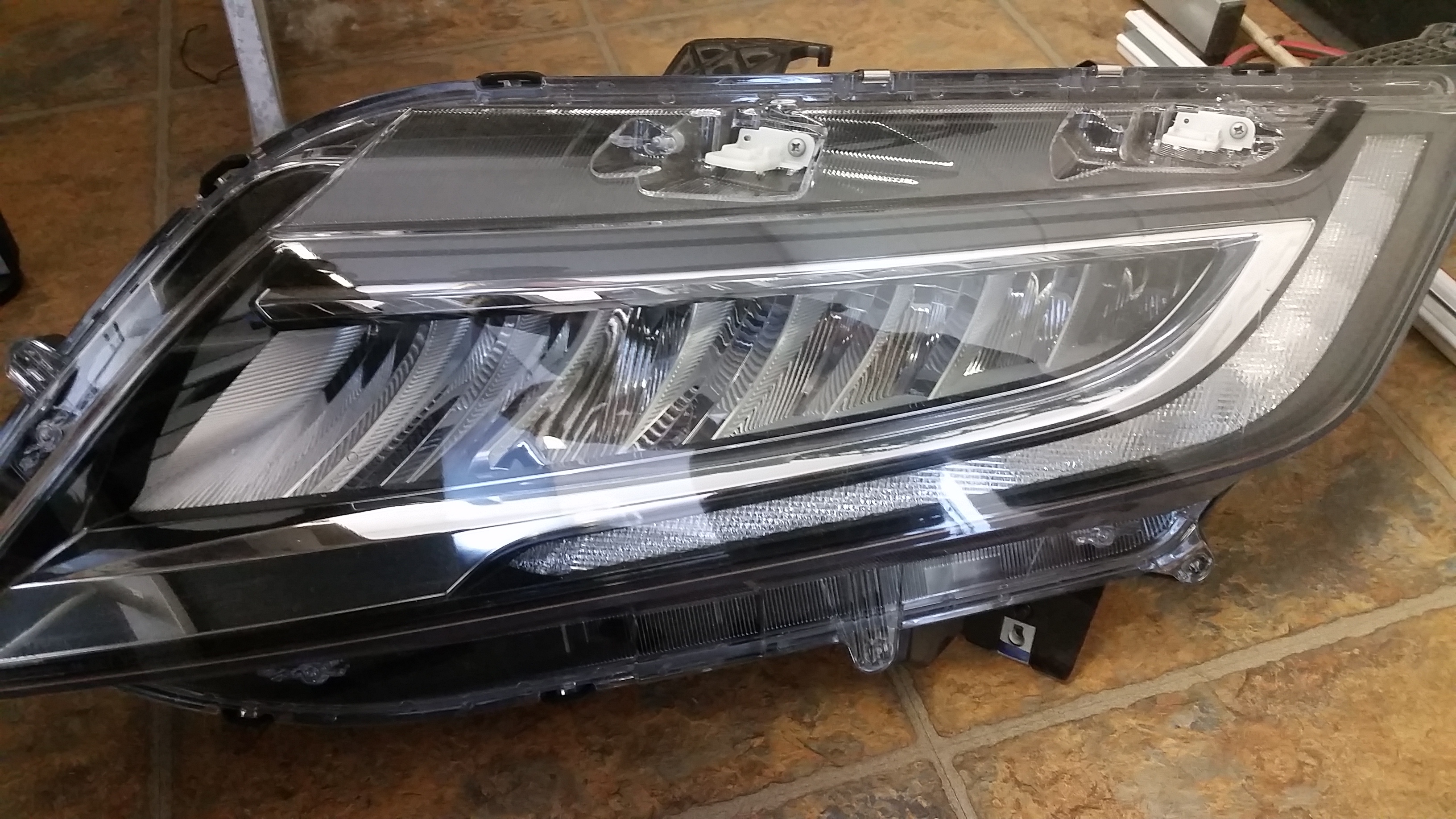
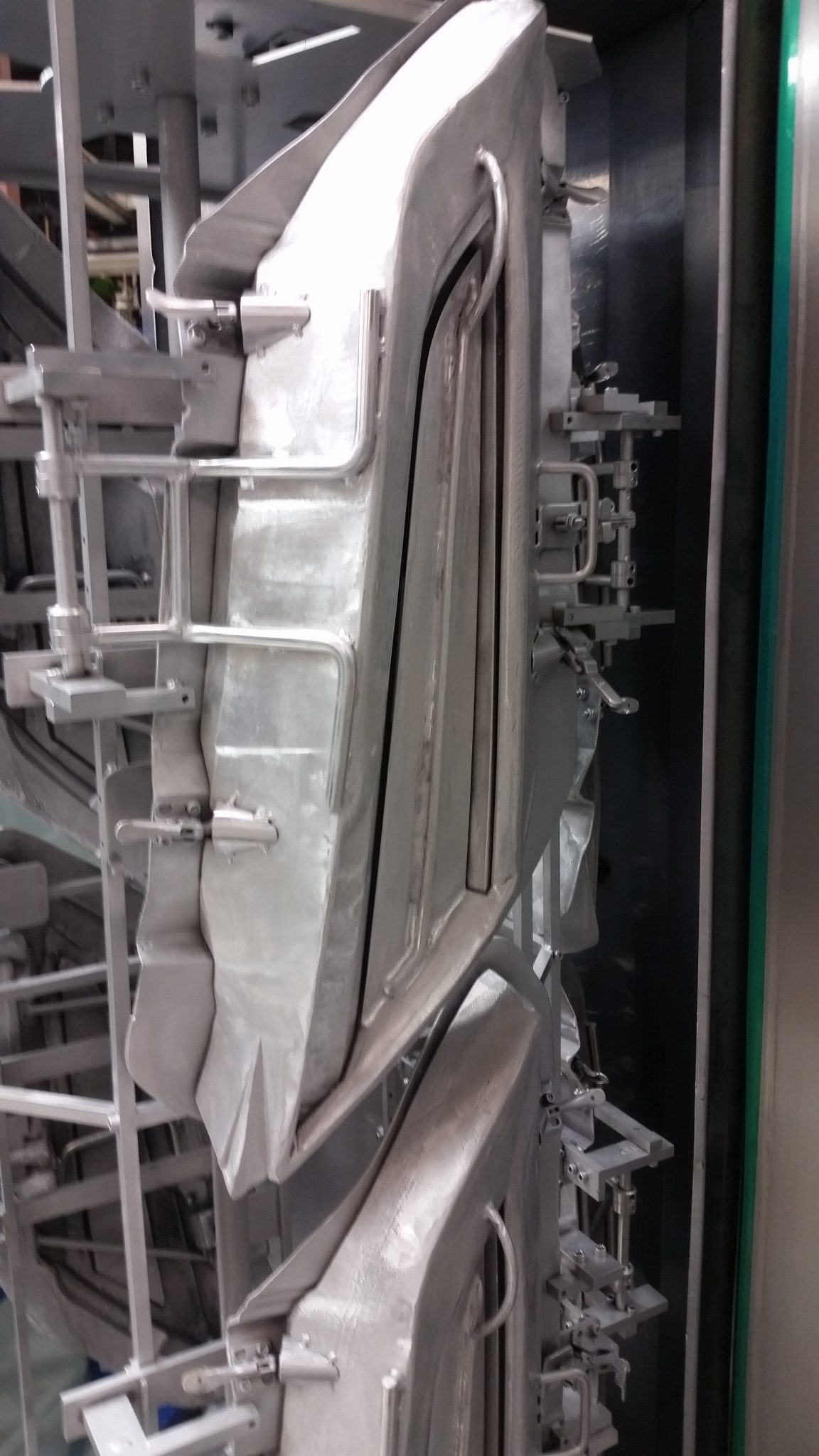
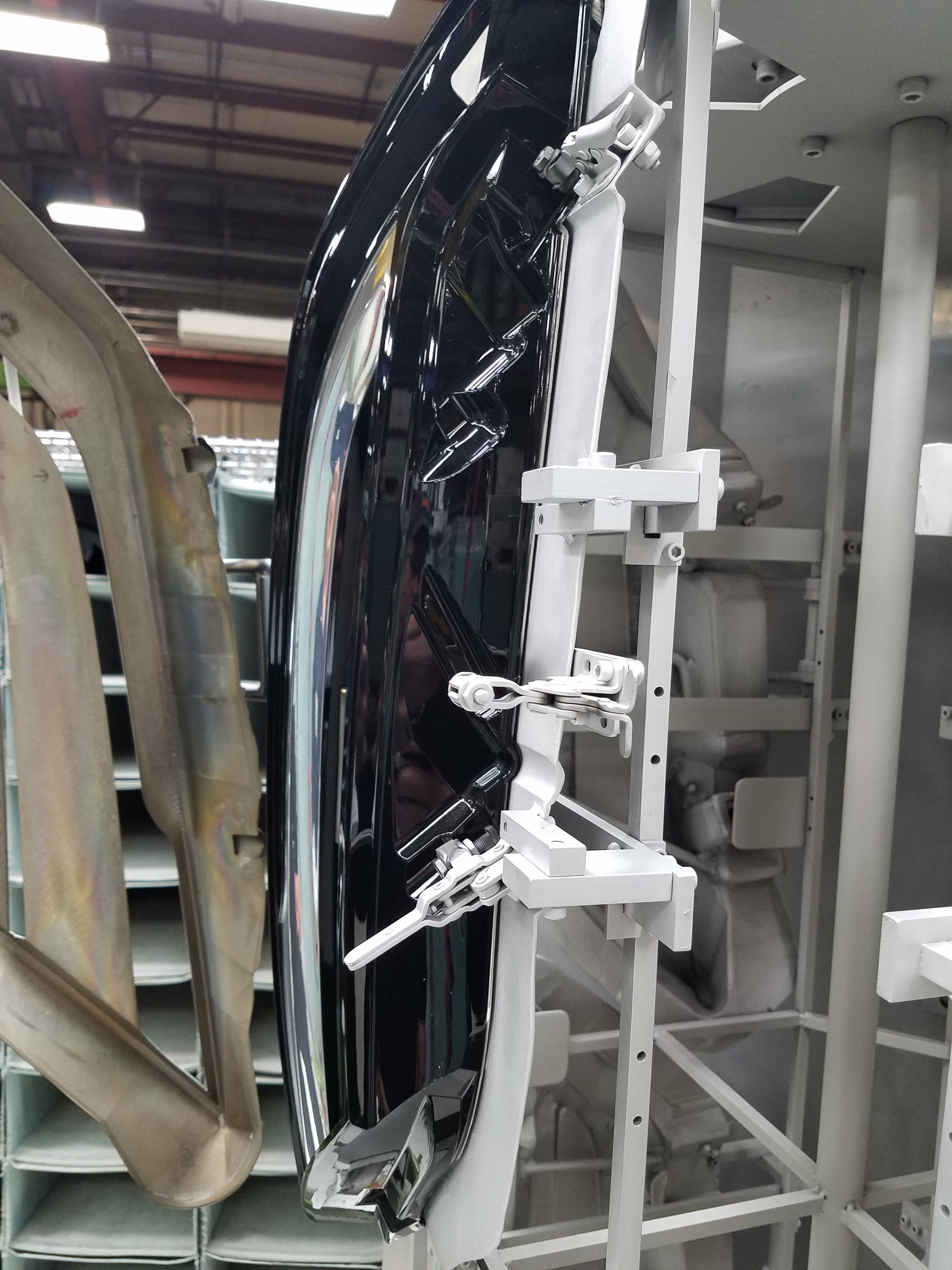
We are a secondary manufacturing company that is heavily involved in the automotive industry as well as the medical industry. We don’t normally deal directly with car companies such as Toyota or Ford, we deal with their customers. Their customers are typically molding, painting, metalizing, and assembling parts to get ready for the plant that will build the vehicles. We make sure that the equipment we use, like the heaters for plating tanks, are reliable and won’t cause any faults in our products. We are the customer of the customer of a major car company, which is referred to as secondary manufacturing. What we do is create tooling to hold parts to be painted or metalized. Metalizing is an aluminum coating that is on headlights and taillights and allows the light to be reflected. We also create paint or metalizing masks which allow only some of the part to be metalized or painted.

This is what a part looks like after metalizing and assembly.

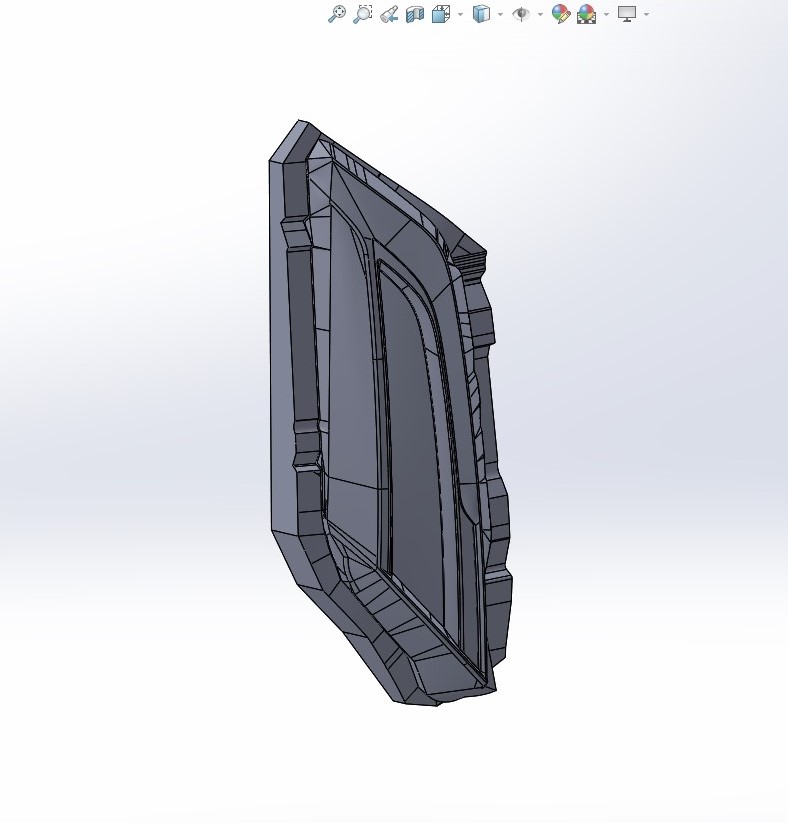
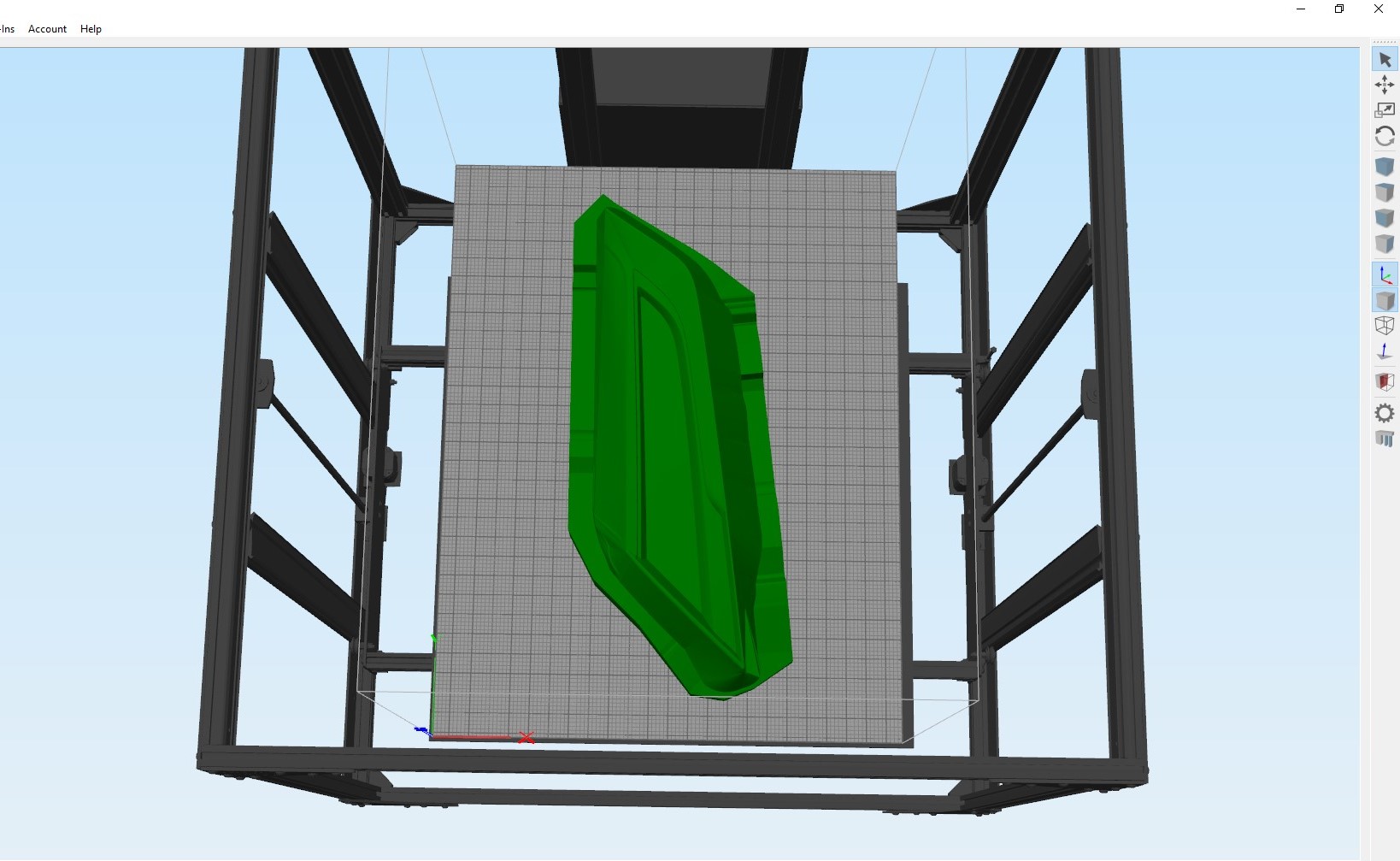
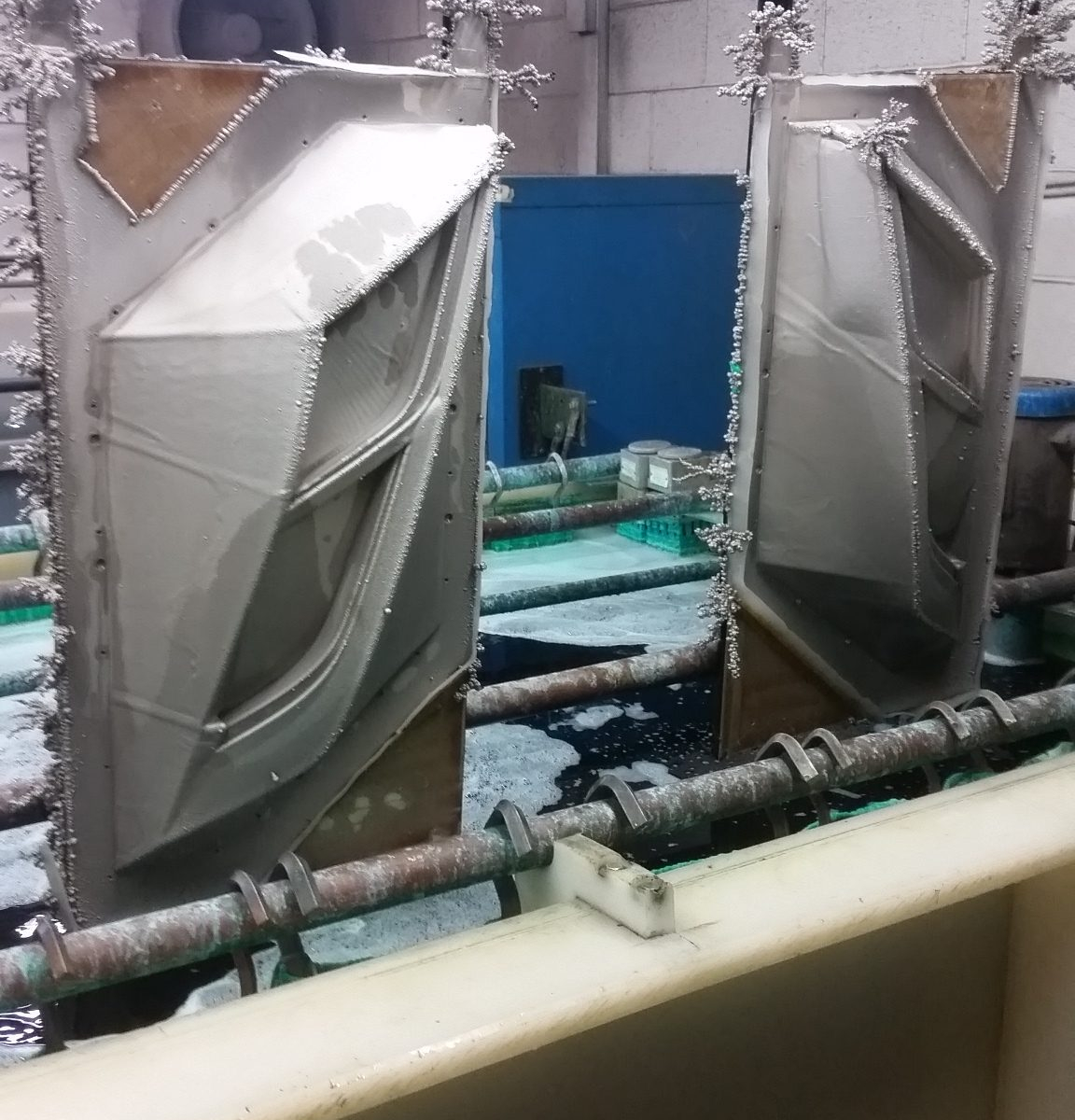
We are using our Gigabot to print out end-use parts as well as molds which I have designed in Solidworks to fit the parts and mask we want, which will then be used for plating in our nickel tank.

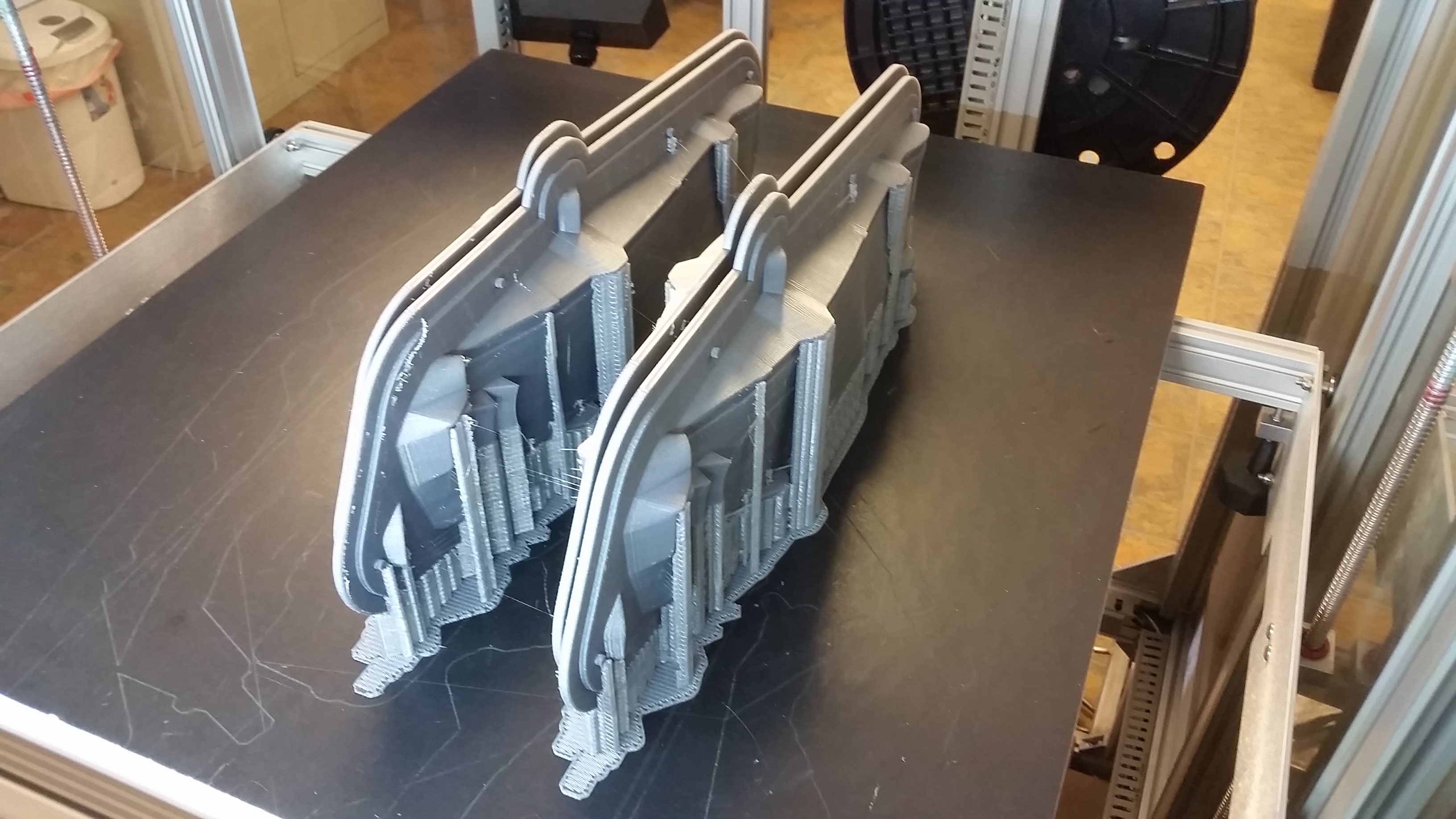
In this picture I have four molds on our printer that we are going to plate with nickel and cut out.

Q. How were you doing this work before you got your Gigabot?

Previous to having our Gigabot we use to have to wait until production-level parts were available. Then we would have to set up our nickel plating molds with a part and wax, and form the wax by hand to get it in the shape we wanted.

Doing it this way caused us many issues, one being that we had to wait to start our process until production parts were available. This meant our customer had to wait to produce until we were done with at least the first set, which could sometimes take up to six weeks.

Q. What brought you to 3D printing? Why did you start to investigate bringing this technology into your business?

Building on the last question, our customers were wanting us to produce production tooling before parts were even available. We then had one of our customers say that we had to produce our tooling with the 3D data only. At this time I was finishing up my CAD/CAM certificate and was wrapping up my second and last semester of Solidworks that our college provided. In this class, I started to learn about 3D printing and how it’s shaping the future. When our customer said that we could only go off the 3D data they provided, it got me thinking about the CNC classes I took and how expensive and time-consuming it would be to produce this via CNC out of plastics.

I kept coming back to the idea: “Why not just 3D print our molds for plating?” So, I talked to the boss about it and we had a couple of tests prints made by a local supplier, and we loved how our production-level parts fit into these prints. We then decided to design an entire job out of the 3D data and have it all 3D printed for us. The downside to this was the still-very expensive cost of having our larger part molds printed, and the time it took to get them shipped to us.

Q. Has 3D printing enabled you guys to take on jobs you couldn't otherwise perform?

Yes, the Gigabot has enabled us to take on more jobs and be able to hire people with less skill since I am now doing all the design and mold setup on it. I used to have to have multiple top-paid artists working with the wax and parts to make our plating molds. Now I can design the molds, design how we’re going to hold our molds in place, and design in clamps and anything else we need. Our new method using Gigabot allows us to do more ahead of time and make everything a lot more accurate.

Q. Do you have an estimate of your time and/or cost savings using Gigabot versus your alternative options of manufacturing?

Contracting out 3D prints externally was very costly. For our first project when we started this whole idea of 3D printing for our plating molds, we spent nearly $40k on just the prints. We were researching 3D printers, but every printer that was remotely affordable had way too small of a build envelope, or it had a large-enough print volume but cost close to what our annual sales were at the time. Printing large parts in many pieces and paying that much out just couldn’t be done, and potentially forking out $40k every project for our larger parts was just not feasible. We were in a dilemma.

I researched for a few weeks and came across a video of a Gigabot printing large-scale parts at an affordable price. For the first time in a couple of months I got excited that our new thought process on how to use a 3D printer was going to become a reality. And that’s when I contacted re:3D.

So, even purchasing the Gigabot compared to what we paid for prints has saved us a lot of money over the last year or so that we’ve had our bot.

20160510_150556

Q. Favorite part about using Gigabot?

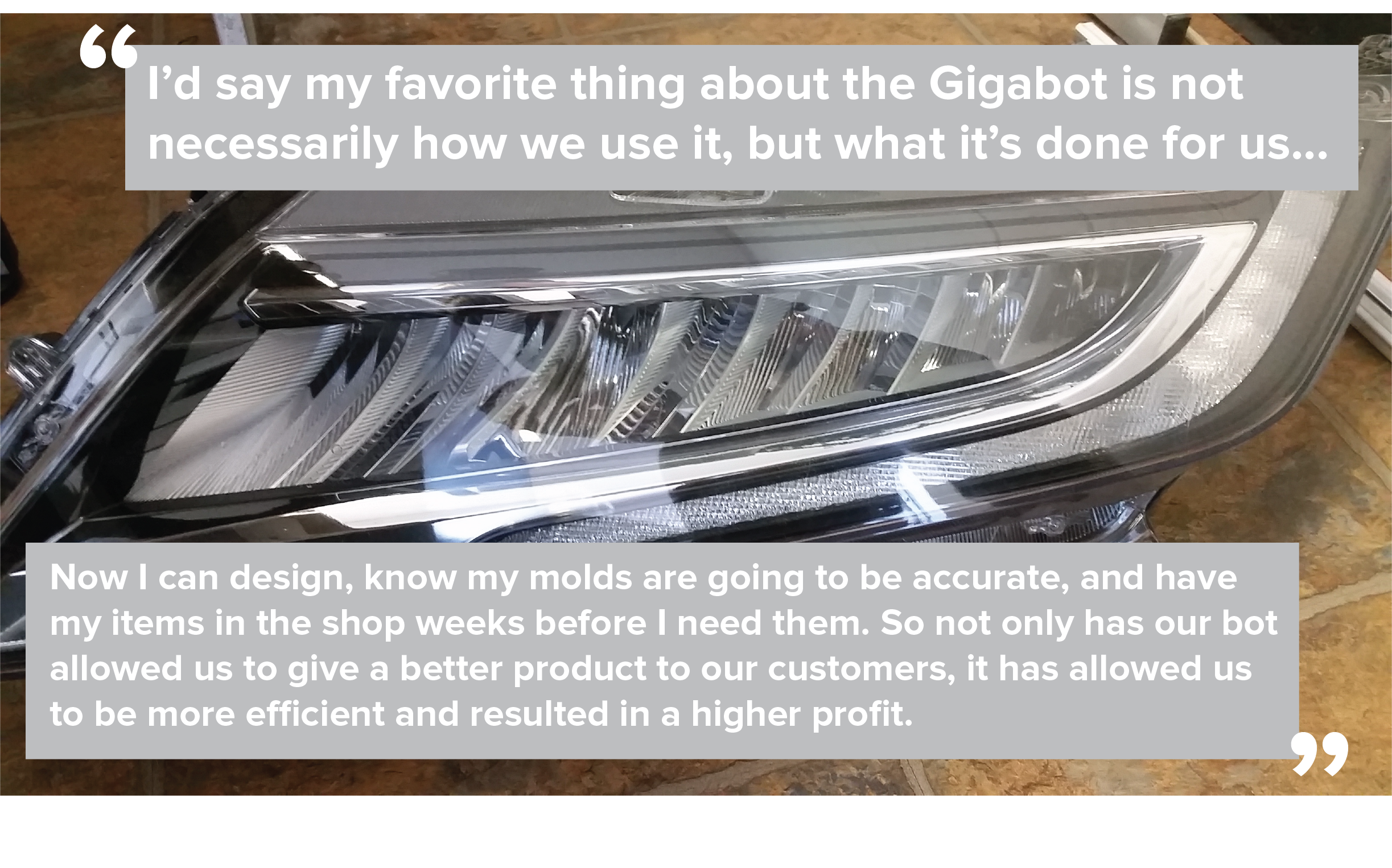
I’d say my favorite thing about the Gigabot is not necessarily how we use it, but what it’s done for us. In having the bot, we are now a lot more organized and getting more jobs shipped out on time and even early. Elaborating on that, by having the bot and being able to do what we do with it, it’s allowed me to design entire jobs on Solidworks, which allows me to order things ahead of when the guys will need them. We used to have to design and try to order after we started working on a project and know what the hand layout of our wax molds would look like. This would force all of our orders to be on a rushed delivery, which would cost us more and give us a lot more to stress out about if things didn’t go as planned.

Now I can design, know my molds are going to be accurate, and have my items in the shop weeks before I need them. So not only has our bot allowed us to give a better product to our customers, it has allowed us to be more efficient and resulted in a higher profit.

Morgan Hamel

Blog Post Author

“If you can build it, they will come.”

Article originally appeared on 3DPrint.com on August 31, 2017

One of the things that often surprises an organization that gets its first 3D printer is the unexpected uses that seem to pop out of the woodwork once it arrives.

Someone in one department will decide to get a 3D printer for a specific project, and once word of the new machine spreads through the organization, a line of people suddenly appears. “Do you think you might be able to help me with a project?” “What about this? Can you print that?”

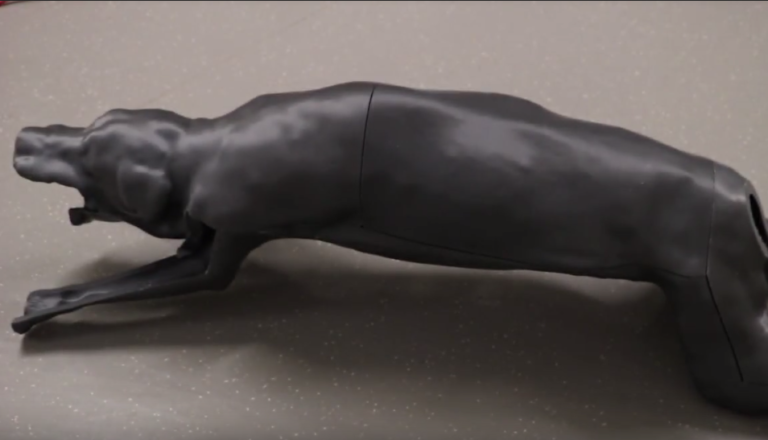
I heard this story at Texas A&M University, where Veterinary Radiation Oncologist Michael Deveau originally got a Gigabot to 3D print components for a canine cancer treatment. Word of his success spread through the hospital, and he soon had colleagues from different departments knocking on his door to ask if he’d be able to help them out.

Deveau has since printed surgical models for neurologists and orthopedists, Ninjaflex models of canine inner ears to be implanted into toy stuffed animals on which students could practice ear exams, and devices to help a researcher with her studies on reducing bladder crystals in goats. He didn’t originally get the Gigabot to do any of those things — he didn’t even know about some of the projects prior to then — but once a solution presented itself, the applications came flowing.

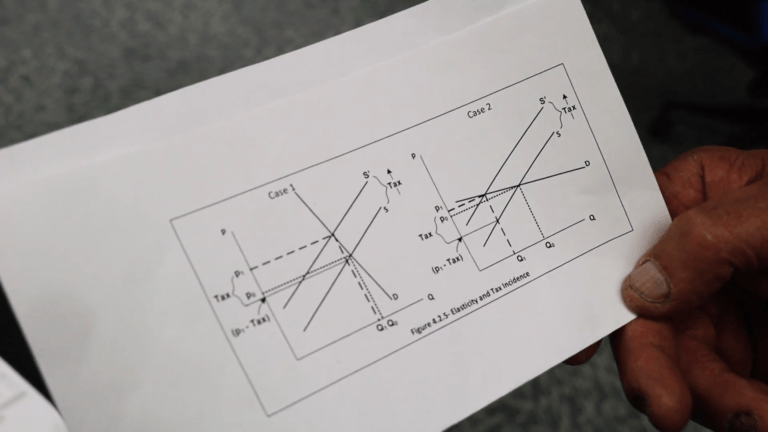
A similar story happened at Syracuse University in New York, where an economics professor was looking for a way to make his class accessible to a blind student. Anyone who’s taken an economics course will know: the subject matter can be very visual, relying on graphs to tell the story of data and trends.

The university had recently opened the doors to a brand-new makerspace, home to a few dozen 3D printers. The economics professor approached John Mangicaro, manager of the makerspace, to see if there might be a better solution for this student than what was already in place.

Mangicaro worked with the professor to convert graphs from the coursework into 3D CAD files which were then printed on the makerspace’s large-scale Gigabot. Based on feedback from the student, they tweaked print settings like layer height until the desired outcome was reached. By the end of it, the professor had a collection of Braille-esque graphs that his student could call on for homework and exams.

Syracuse didn’t originally build a lab to 3D print teaching aids to make their classes more accessible — it was a happy byproduct of making the right tools available on campus. And this is exactly one of the things that makes 3D printers so powerful: their ability to unlock previously unconsidered or impossible solutions to problems. Give people access to a tool with nearly limitless potential, and they might just surprise you.

So if your organization is thinking about getting a 3D printer, prepare yourself. You may find yourself working on product ideas you hadn’t considered, or printing off-the-wall solutions to problems that weren’t even on your radar, or you may unintentionally make yourself the new most popular person in the office.

To repurpose a famous quote: “If you can build it, they will come.”

Morgan Hamel

Blog Post Author

3D Printing Products for Refugees

The Gigaprize is a competition we run for every 100 bots we sell to donate a Gigabot to an organization that will use it for good. Scott Key originally saw the call for contest entries on Instagram.

He and his business partner, Sam Brisendine, thought the odds of them actually winning were pretty slim, but they decided to give it a shot anyway. That decision ended up paying off handsomely.

The winners of the 400th Gigabot are Good Works Studio, a Houston-based design firm specializing in products for refugees.

Sam and Scott met as students at the Rice University School of Architecture, where they developed a sort of Swiss Army Knife crate of supplies for refugees as a class project. The crate itself broke down and transformed into a floor, and as time went on, they came to realize that the most valuable part of the whole package was not the cache of supplies inside but the box itself. Emergency Floor was born.

Thus a school project gave birth to Good Works Studio, the company that the two cofounded specifically to develop products for the refugee space. Their first product, Emergency Floor, is a modular flooring system for refugee camps that can be quickly installed and configured to the varied layouts and sizes of different shelters.

Flooring for these refugee camps provides families with something more than just comfort: safety. The flooring acts as a thermal break between the cold nighttime temperature swings of places like Iraq and Lebanon, as well as a means to combat the higher rates of diarrhea and parasitic infections that come from living in the dirt.

Emergency Floor is just the first product that Scott and Sam have released to tackle problems faced by millions of refugees around the world, and they’ve got more in the works. However, the design and prototyping process that goes into developing products like these is not cheap, and Good Works Studio is a young, cash-strapped, two-man company whose founders work separate full-time jobs to pay the bills. They ran a crowdfunding campaign to get Emergency Floor off the ground, but they knew that the money and time needed to take future ideas from paper to product would be prohibitive.

Traditional manufacturing and tooling isn’t the most forgiving when it comes to the design process. Get a mold made and then decide you want to tweak something in your design, and you’ve just gotten yourself a $15,000 paperweight. Perfecting the design before moving on to manufacturing was imperative.

“Previously we had outsourced 3D printing and other prototyping methods,” Scott explained, but, as he went on, “It was just going to be an impossibility to do the amount of iterations we needed to get a product to where it needed to be.”

Having an in-house 3D printer was the dream.

For Scott and Sam, Gigabot is an enabler. Having a 3D printer of their own means getting well-designed products into the hands of people who need them more efficiently and effectively. They can send a design file to print in the morning, have a prototype in their hands by the afternoon, and start printing a modified version before they leave at the end of the day. This ability to iterate their designs quickly and in-house allows them to move through the prototyping process much faster and less expensively than any other avenue.

The overarching vision that drives Sam and Scott is a desire to help those in need around the world through design. The next product they’re working on is a device that can be installed into any shelter to act as an air conditioner – sans electricity – using the Venturi effect.

Our aim with Gigabot is to enable others to create products that make this world a better place, and the Gigaprize is our way of making this technology even more accessible to people who will do just that.

As Sam put it, “Design can do good for those who can’t afford it.” We couldn’t agree with him more.

Learn more about Good Works Studio and their first product, Emergency Floor: 
Twitter: @EmergencyFloor
Instagram: @EmergencyFloor
Facebook: https://www.facebook.com/emergencyfloor/

Morgan Hamel

Blog Post Author